
On death, flowers, and bread.
confessions from my kitchen

Dear friend,
This past weekend, I used my sweet kitchen to prepare flowers for another funeral. It’s been five years since my last one; the large, marble-topped table that sits in the middle of our kitchen has held altar pieces, casket pieces, centerpieces, bouquets, and sprays. In a past life, before my hands were busy raising children and typing words (and even before Stuart claimed his spot beside me), I was building a career in a flower and garden house, spending my days tangled up amongst moss, bear grass, and poppy pods. For a decade, I served in this small and quaint garden house — filling endless floral and plant orders on busy days, and arranging shop retail displays of antique-inspired-knick-knacks on slow ones.
My hands were, and still are, trained for this work.
So when needs arise in our community, as they do, I am more than happy to be put to work. Such effort makes me feel useful when otherwise, I feel anything but. Death has a particular way of making one feel completely helpless. Yet the helplessness is mended by helping and even though shopping for terra cotta pots and sourcing buckets full of yellow sunflowers may not seem like much, it is something. It has a way of directing emotions, of directing grief. Sort of like baking bread.
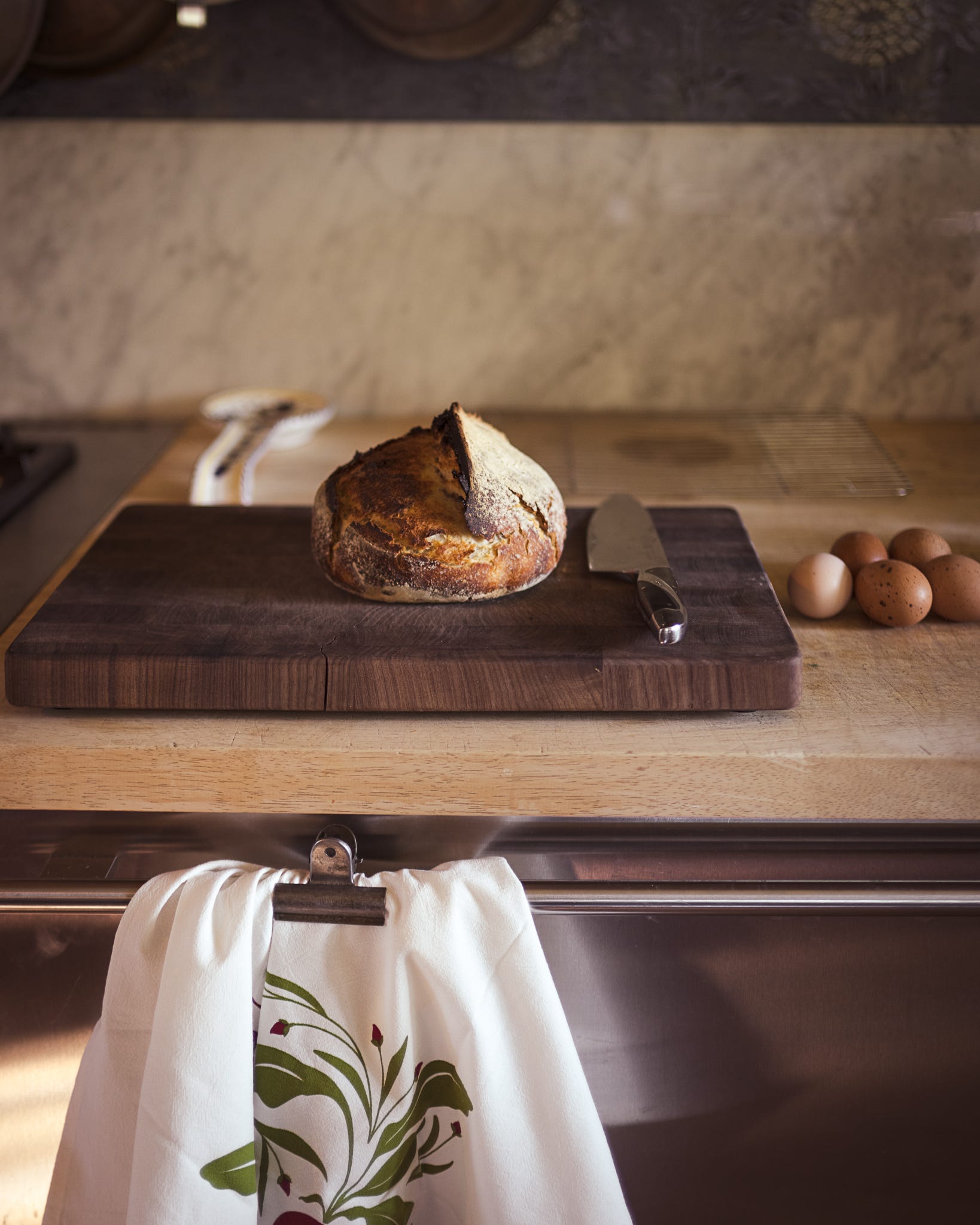
I play the music my soul needs to hear. I prepare my tools and while I assemble, I let myself feel. I don’t try to sort out emotions or answer hard questions, I just let it come and rush over me. Such a time is cathartic and at the end, by God’s grace, there is a beautiful piece of the natural world to share with others. Something beautiful to delight in. It’s a small thing, but what is life but a billion small things, culminating to shape us? These are tiny gifts that helps hard moments to be beautiful. And thus, my kitchen serves us as is most needed on any given day; the floor filling with flower stems and our family’s lunch relegated to what we could scrounge out of the refrigerator and eat cold. There was no counter space to be had.
My kitchen has held much heartache over the years; friends have sat in the very chair I type this from and wept, children have been corrected, and more than one marital disagreement has taken place at the counter while stirring soup or chopping onions. Yet the kitchen has held endless joy too. It’s from this kitchen that we filmed our pilot for Food Network (a much grander achievement in my career than I ever thought possible). I’ve written books at the table and the counters have supported many children over the years, eager to stir and mix alongside me. When Juliette, our youngest, was a baby, she sat in a squishy pad on the countertop for hours a day. This way, as I labored, I could easily bend down to greet her, nuzzle into her neck, tickle her toes, and smooch her cheeks.
When I see our kitchen now, I see the gift of use. Edges of drawers are worn with fatigue, the tile floor we self-installed has begun to look as if it was, indeed, self-installed, and the aprons that hang nearby are stained with heavy use. Yet in the course of this daily grind, this layer of fatigue on our treasured kitchen, my hands are trained. Much like my time spent at the flower shop, the daily work in my kitchen has given me muscles that I can flex when needed: muscles to make double and triple batches, to cut biscuits, mince onions, know the softness of a perfect ripe peach, wash dishes in beast-mode, or turn a little of this and a little of that into something nourishing and delicious.
Daily work teaches you such things.
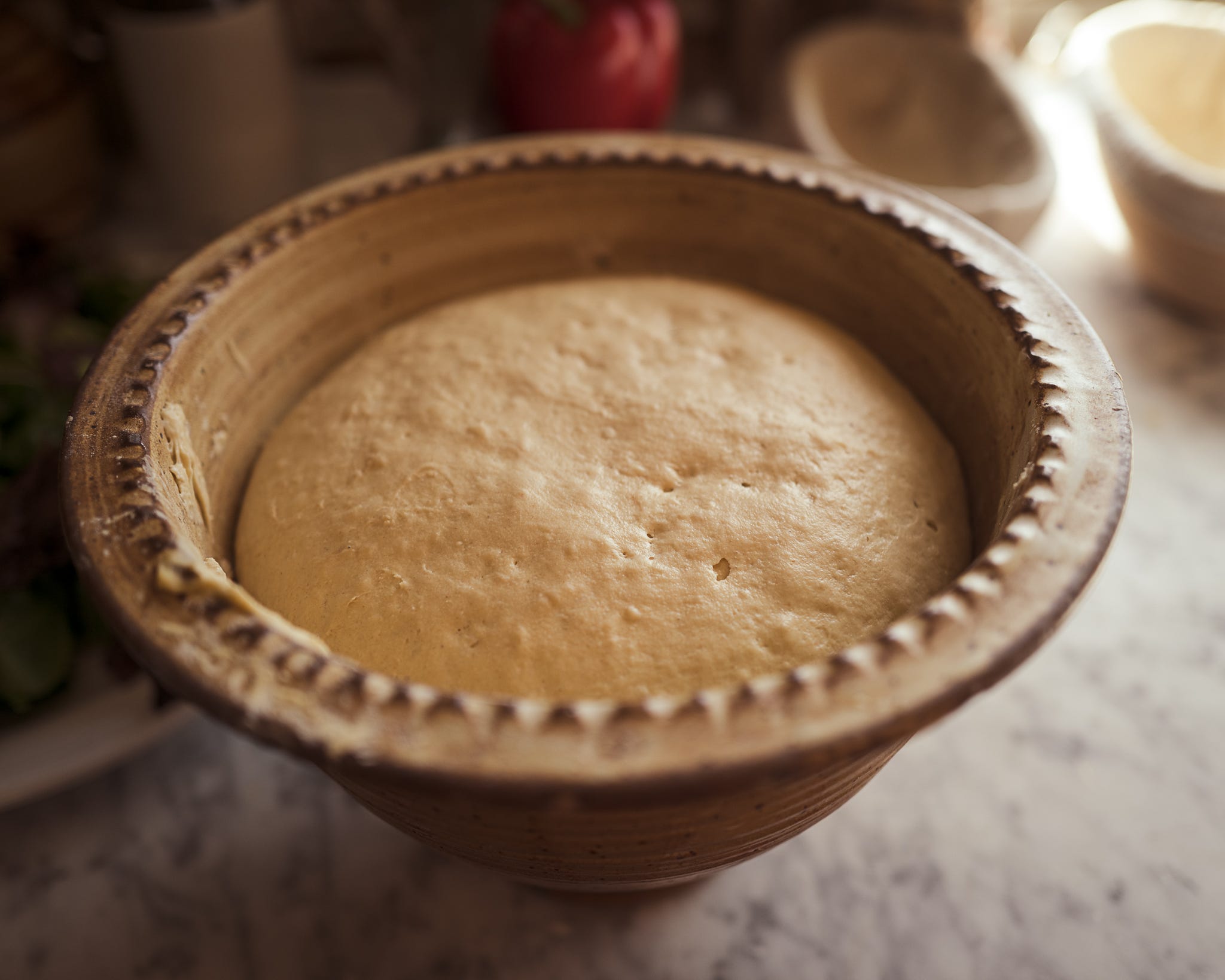
Coming home from the funeral, fatigued and weary from both the work and the loss, I found myself in the kitchen — I always find myself in the kitchen. I didn’t know what to do with myself. Melancholy. So I did what I know how to do, what work my muscles revert to when a lull is felt in purpose. I made bread. I didn’t have much to give, so I reached for one of the first bread recipes I learned how to make. It is a recipe that doesn’t require much of the baker; if you’re downtrodden, off your sourdough schedule, or simply unable, this is my bread recipe for such occasions. There are days I concern myself with hydration levels, cold ferments, folding and proofing to perfection. There are also days when I simply need the bread to serve my heart, my family. I need something comforting for the table — the promise of something rising on the countertop, in the warmth of the August kitchen.
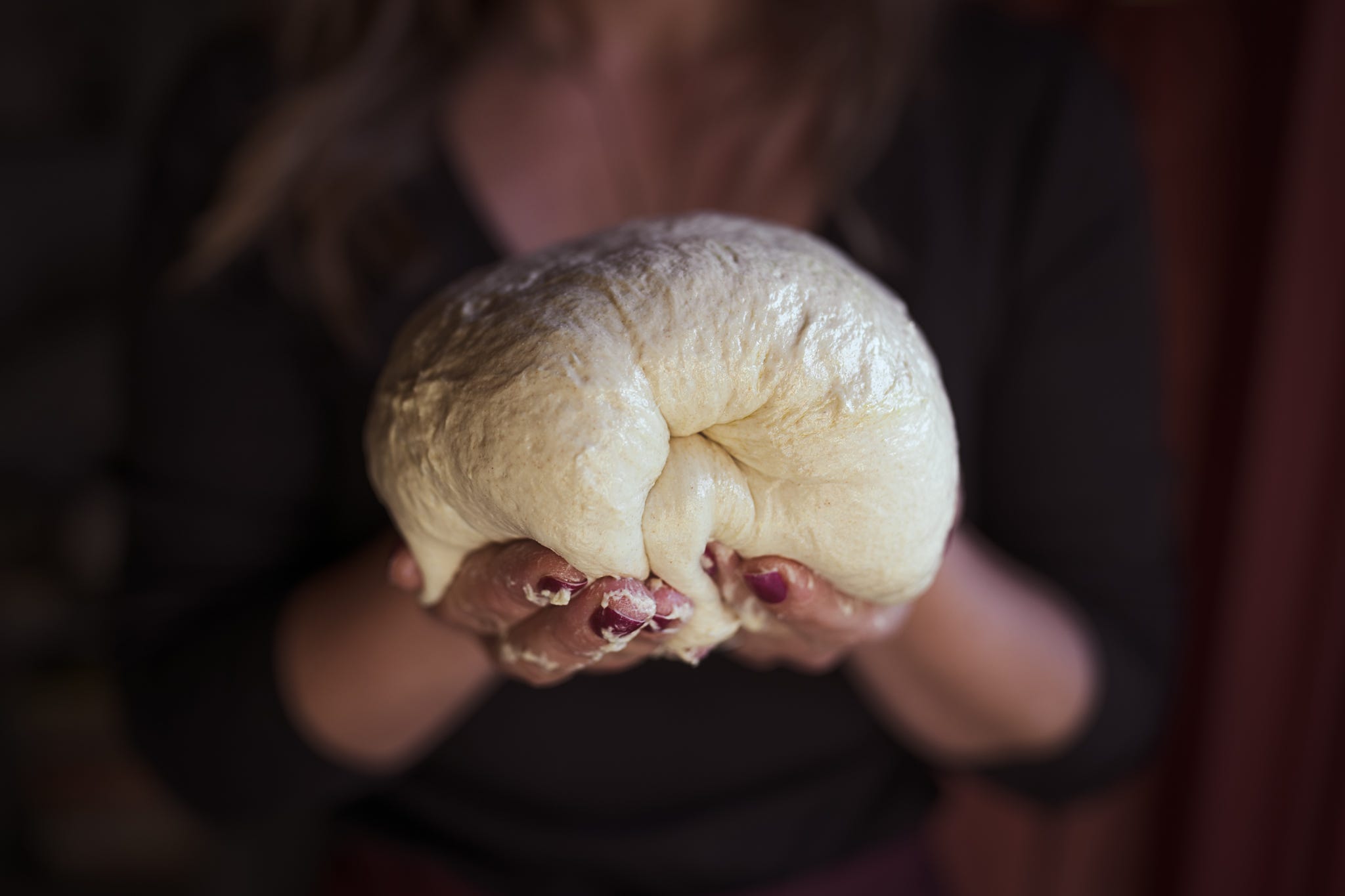
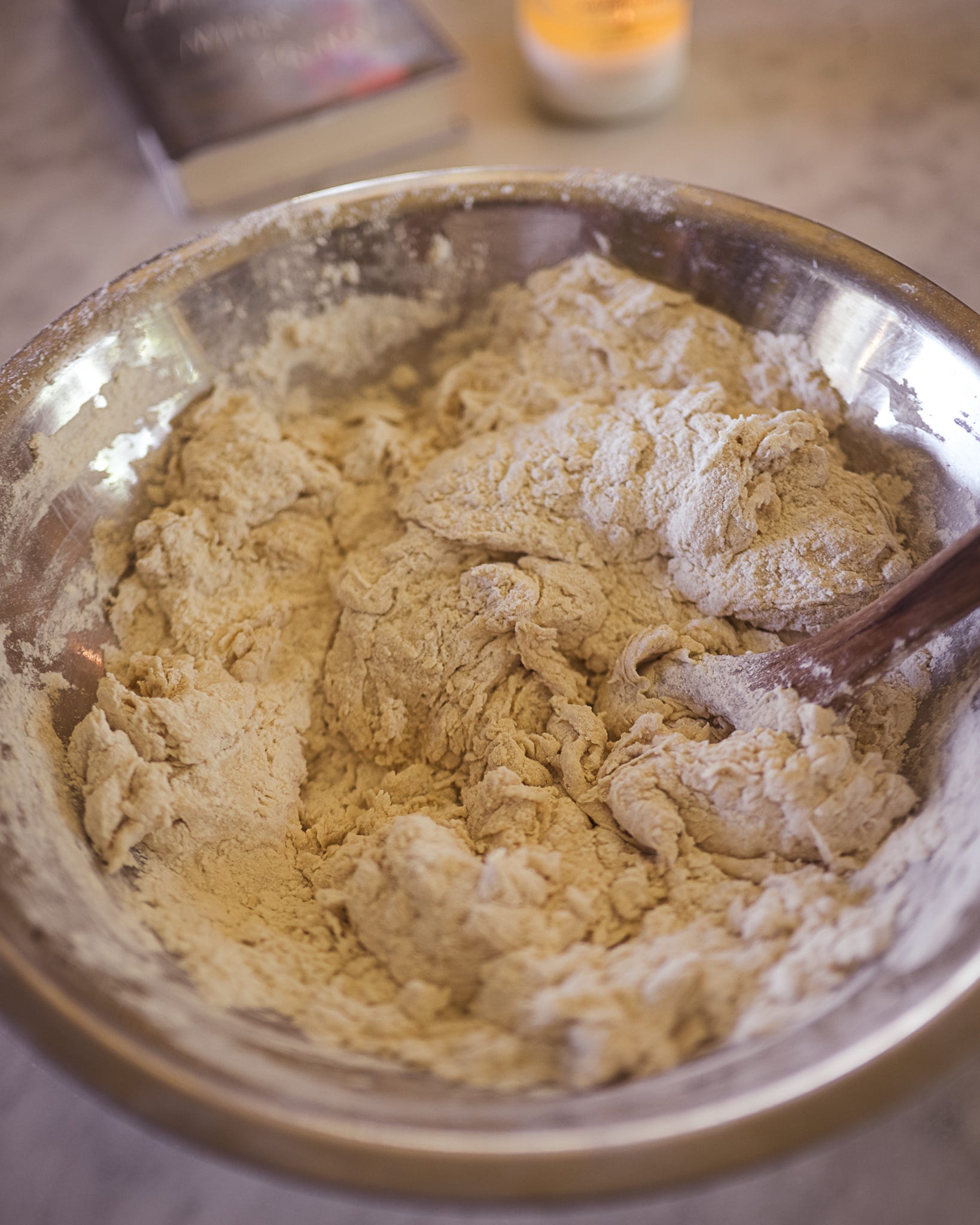
And thus, I want to share my “Eat, Drink, and Be Merry” bread recipe with you. It is forgiving and endlessly adaptable (rosemary, cheese, and roasted garlic are my favorite additions). It’s one that has seen me faithfully through fifteen years of bread baking — on good days and bad, on productive days and times of melancholy. It is bread for you and for any that find themselves at your table. It is a bread that comes with a healthy slice of hope and comfort.
The morning following the funeral, I tidied the kitchen, swept up the mountain of flower stems, washed up the buckets, and scrubbed out the sink. I lit a candle. After an overnight rising, the bowl of bread dough I spent five minutes mixing the night before sat cheerfully on my countertop, ready to be shaped and baked into little, round, golden gifts.
My kitchen is here to be used, to be used up in service to others, and it is a great joy to me when I can use it for just that — this week, that looked like funeral flowers. Next week? Who knows. But what I do know is that there will be bread.
Eat, Drink, and Be Merry Bread
Keep reading with a 7-day free trial
Subscribe to Confessions From My Kitchen to keep reading this post and get 7 days of free access to the full post archives.